The state of SEO in 2026
Google’s AI Mode has surpassed one billion monthly users. 88% of AI Mode citations now come from URLs that aren’t even ranking in organic search for the same query, according to Moz’s research across nearly 40,000 queries. Traditional SEO alone doesn’t cut it anymore.
I have been using all three major SEO platforms for years. This comparison comes from real-world testing across multiple client accounts, not marketing materials or affiliate pitch decks. The goal isn’t to crown a single winner. It’s to help you pick the right tool for how you actually work.
The three philosophies
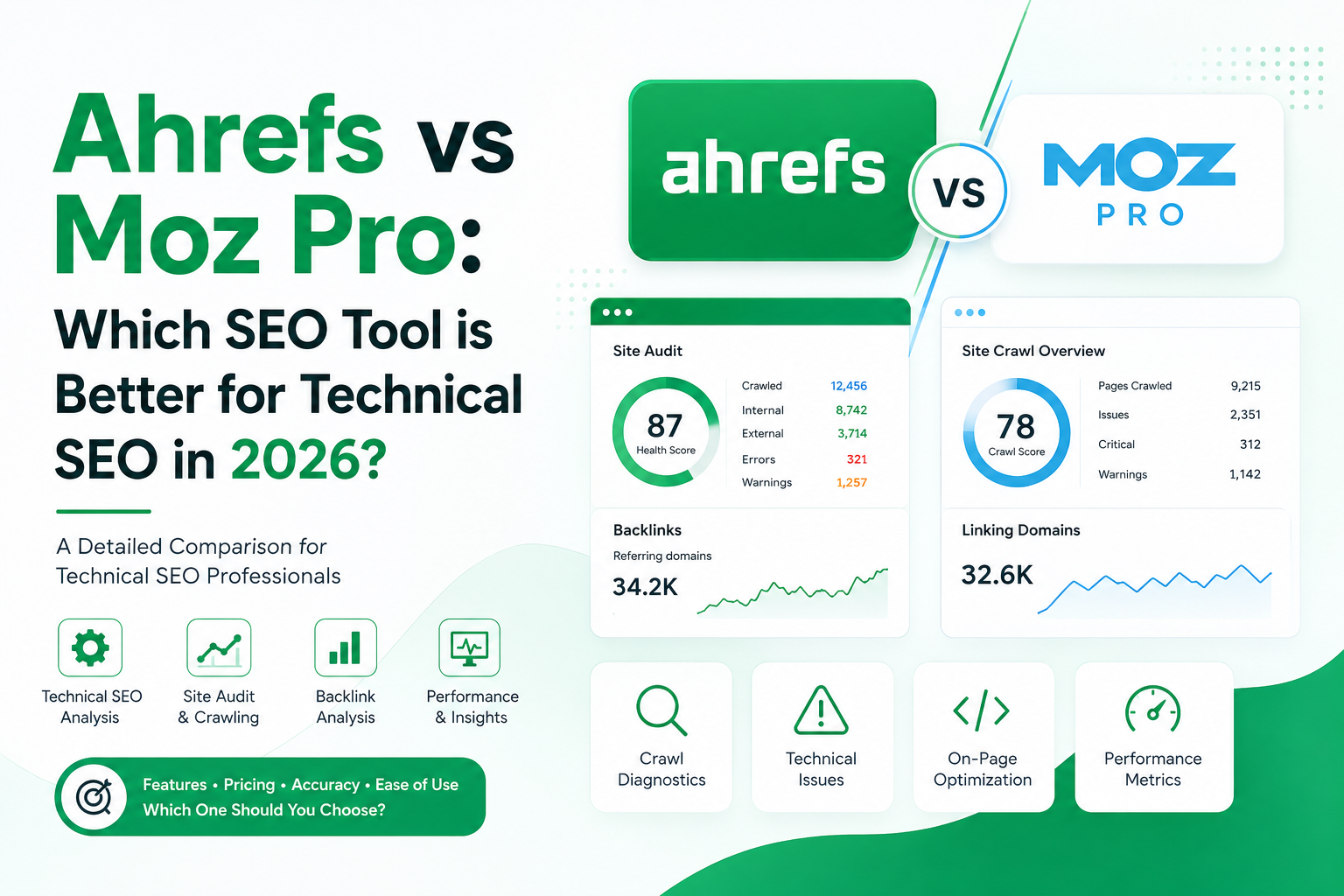
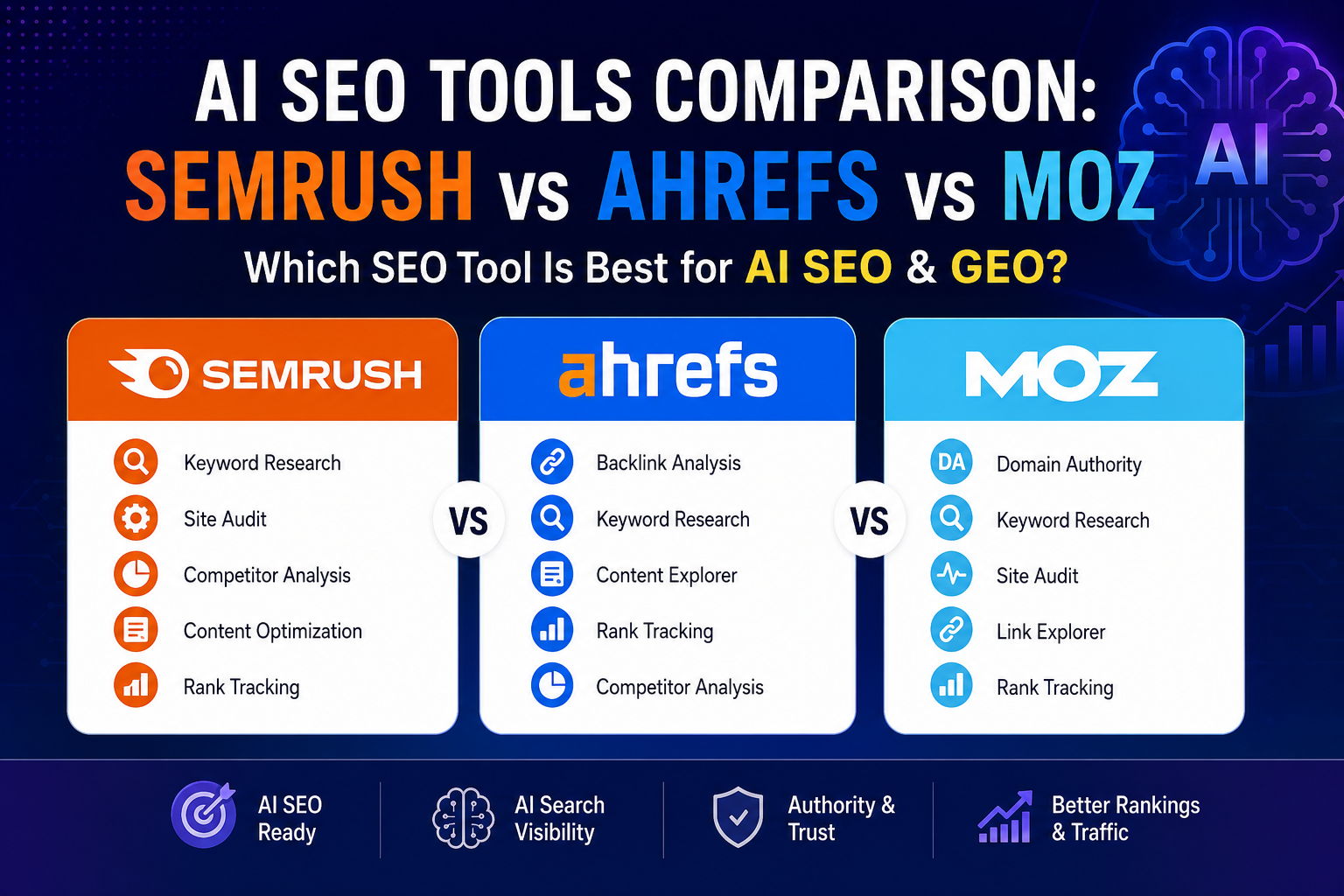
Ahrefs, SEMrush, and Moz represent different ideas about what SEO tooling should be. Understanding this is the most important step in choosing correctly.
SEMrush: the all-in-one marketing cockpit
SEMrush started as a keyword tool and evolved into a full marketing platform. SEO, PPC, social media, content marketing, PR, market research, 50-plus tools under one login. It’s the tool for marketers who don’t want to juggle multiple subscriptions. If your role spans SEO, paid search, and content strategy, SEMrush consolidates what might otherwise require three separate tools. Starting at $139.95/month with a 14-day free trial, it’s the most expensive entry point but arguably the broadest offering.
Ahrefs: the data junkie’s precision tool
Ahrefs went full data junkie. It’s obsessed with backlinks, crawlers everywhere, metrics only true SEO nerds can love. Sharp, clinical, ridiculously powerful if you know what you’re doing. If you don’t, it’s like giving a Formula 1 car to someone who just got their license. Great engine, brutal learning curve. Ahrefs is built for SEO specialists who prioritize depth over breadth. Its backlink index remains best in class, though SEMrush has closed much of the gap in recent years.
Moz: the beginner-friendly workhorse
Moz stayed friendly. It feels like the tool built for people who want to understand SEO before drowning in it. Clean dashboards, gentle pacing. Smaller database, sure, but the UI doesn’t fight you. Moz has been in the SEO business since 2004, longer than Ahrefs (2011) and SEMrush (2008). That longevity produced Domain Authority, the industry-standard metric for predicting ranking potential. Moz is the budget champion, with plans starting at $49/month ($39/month on annual billing), making it the most accessible entry point for beginners and small businesses.
Core feature comparison
Keyword research: the data scale gap
When it comes to keyword databases, the numbers tell a clear story. SEMrush maintains the world’s largest keyword database at over 27.9 billion keywords, dwarfing Moz’s 1.25 billion. Ahrefs sits in the middle with approximately 28.7 billion keywords, edging out SEMrush slightly in count but not meaningfully in practice.
Moz caps how many keyword suggestions you can see, often around 1,000 per query on lower plans. That’s a practical limitation even if the index is large behind the scenes. SEMrush’s Keyword Magic Tool delivers millions of ideas per seed term with advanced filters for intent, questions, and AI Overviews visibility. In my 2026 testing, SEMrush shows 89% correlation to actual ranking difficulty, outperforming Moz in predictive accuracy for competitive niches.
Winner: SEMrush for sheer volume and predictive accuracy. Ahrefs for difficulty score realism. Moz for basics but limited in scale.
Backlink analysis: the great debate
This is where personal preference and use case diverge most sharply. Ahrefs has long held the crown for backlink data freshness and comprehensiveness. For link-building agencies, Ahrefs is widely considered non-negotiable. The data is more comprehensive, more accurate, and updated more frequently than either SEMrush or Moz.
The raw index numbers are closer than ever. Moz claims approximately 45.8 trillion links, SEMrush claims 43 trillion plus, and Ahrefs claims about 35 trillion. But raw link count isn’t everything. Data freshness and update frequency matter more. Ahrefs’ Site Explorer gives you a complete view of any domain’s organic performance, and its Content Explorer tool is excellent for finding link-worthy content in any niche. SEMrush counters with Authority Score and superior link-building workflows, prospecting, outreach templates, toxic link detection, and CRM-style tools for agencies.
Winner: Ahrefs for backlink freshness and depth. SEMrush for link-building workflows. Moz for basic backlink checking.
Technical SEO and site audits
All three tools offer site audit functionality, but with different strengths. Ahrefs’ Site Audit crawls your site for technical issues across 170 plus on-page and technical SEO factors, including indexability, performance, hreflang, canonicalization, structured data, and internal links.
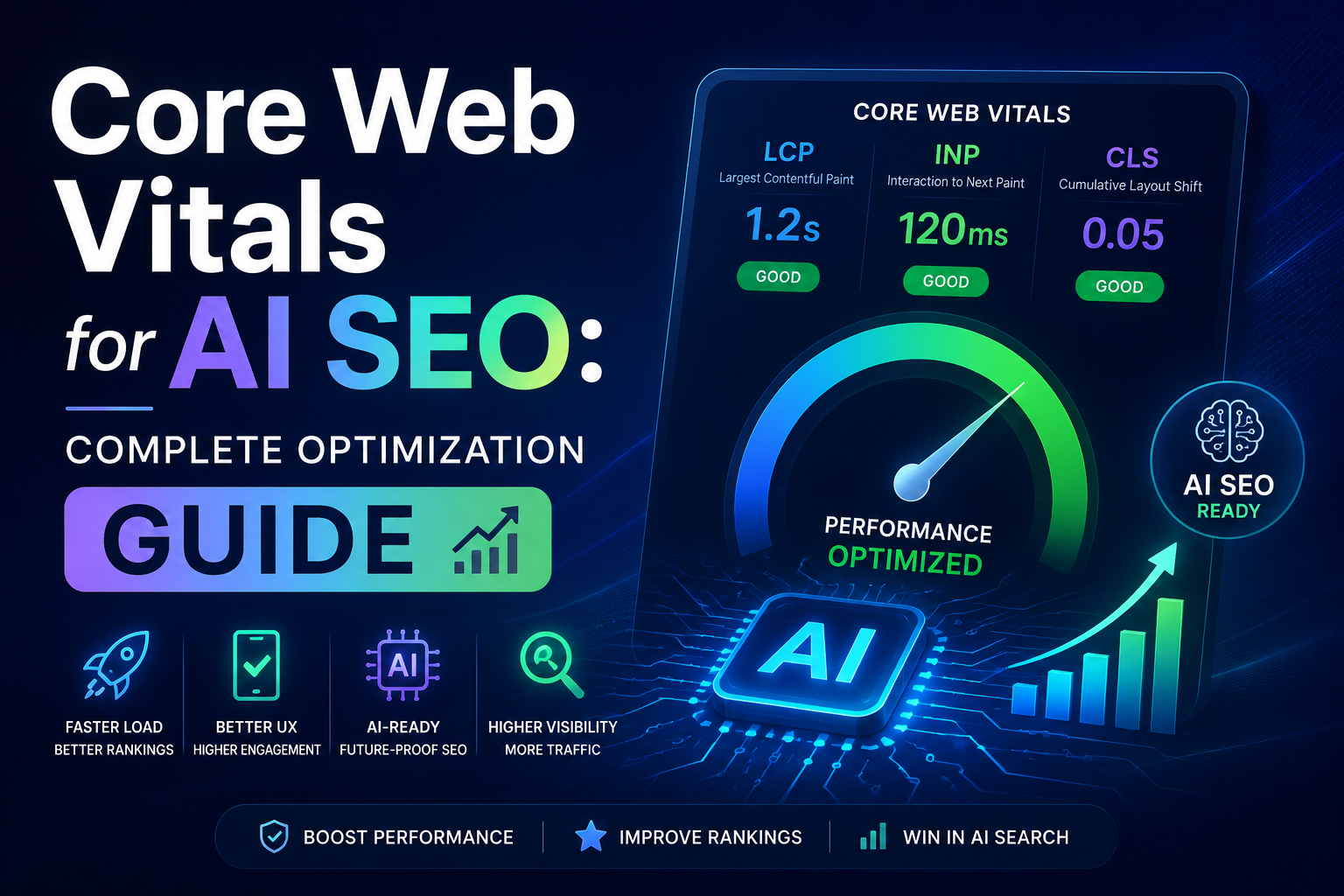
SEMrush goes deeper on mid-tier plans with Core Web Vitals integration, log file analysis, and mobile performance checks. Its On-Page SEO Checker and Content Analyzer integrate AI suggestions more aggressively than either competitor.
Moz covers the basics like title tags, internal links, and crawl issues in a clean, guided interface. It’s the least intimidating for beginners but lacks the depth of SEMrush or Ahrefs for large-scale technical audits.
Winner: SEMrush for comprehensive technical SEO. Ahrefs for reliable site audits. Moz for beginner-friendly basics. For a hands-on example of a technical audit in practice, see the technical SEO audit checklist.
AI features: the 2026 battleground
This is the most significant area of differentiation in 2026. All three have launched AI visibility tools, but with very different approaches.
SEMrush AI: the broad monitor
SEMrush has introduced the AI Visibility Toolkit as a standalone product starting at $99/month per domain, also bundled into SEMrush One plans starting at $199/month. The toolkit tracks how your brand appears in AI-generated answers across ChatGPT, Perplexity, Gemini, and Google AI Overviews. It covers AI visibility benchmarking, competitor research, prompt research, brand performance tracking, AI crawlability checks, and reporting support.
The biggest strength: it gives you a structured way to monitor AI search visibility instead of manually checking each platform prompt by prompt. The biggest limitation: it’s stronger as a monitoring and reporting tool than a full execution platform. You can find visibility gaps, but your team still has to plan, write, and optimize the content that closes those gaps.
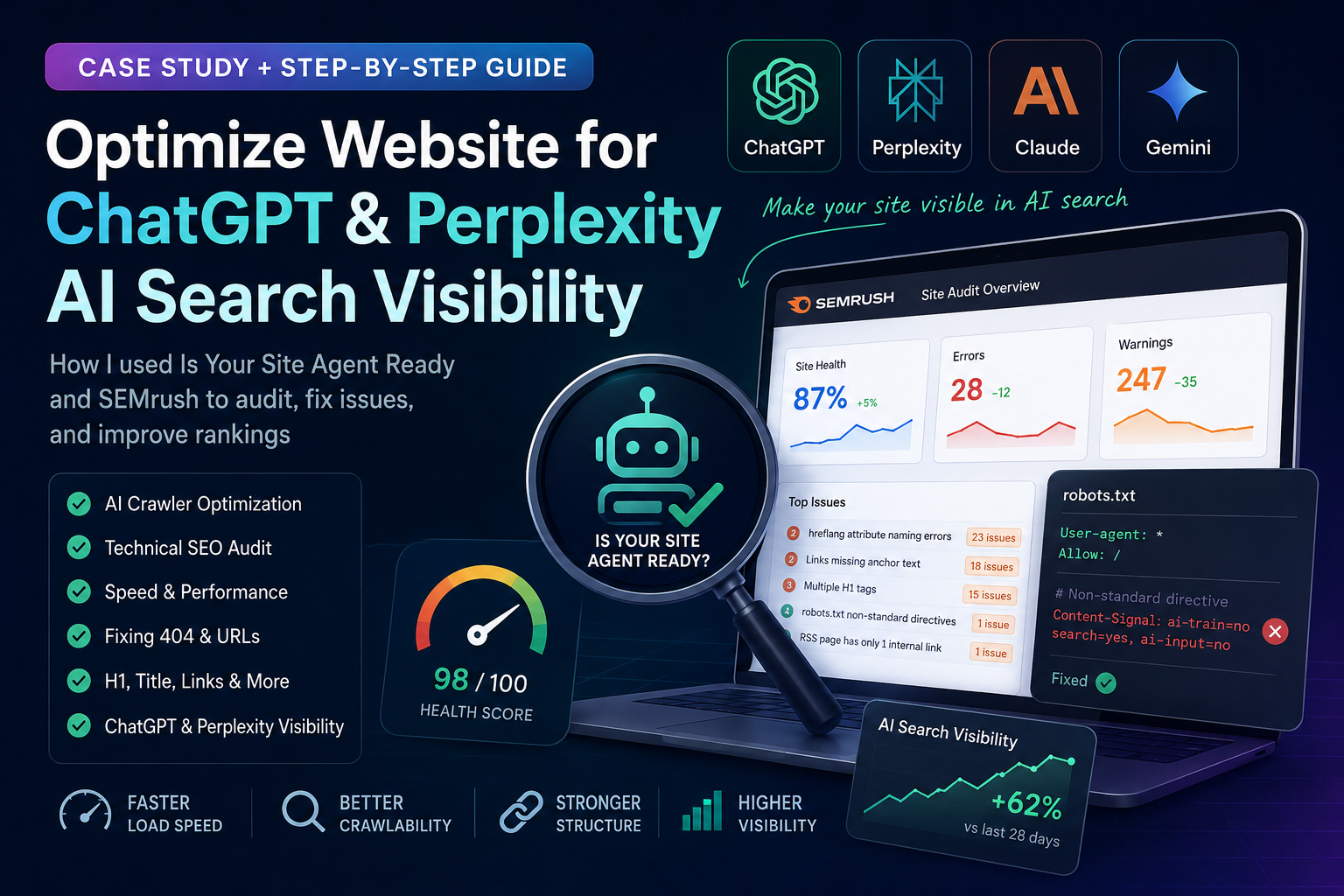
One criticism worth noting: the toolkit lacks CDN integration, meaning it can miss bot blocks or firewall rules that quietly suppress AI crawler access to your content. You can appear “visible” in the dashboard while remaining invisible to the actual AI model. For a deeper look at optimizing for AI search engines specifically, check the GEO SEO complete guide.
Ahrefs AI: the modular approach
Ahrefs has taken a modular approach to AI features. Brand Radar starts at $199/month per AI platform and monitors AI visibility across 300M plus search-backed prompts across six AI platforms, benchmarking your share of voice against competitors. The AI Content Helper is included in all plans (even free) with 1 document per month, available as a paid add-on for heavier usage.
Ahrefs has also integrated Grok into Brand Radar, adding another AI platform to its monitoring coverage. Free AI writing tools for generating titles, video descriptions, and ad copies are available without any subscription.
The downside: AI features are mostly paid add-ons. The combined cost of an Ahrefs Standard plan ($199/month) plus Brand Radar ($199/month per platform) quickly escalates to $398 to 500 plus per month for full AI visibility coverage.
Moz AI: the affordable entry
Moz Pro has included AI-powered keyword suggestions on every plan and an AI Visibility feature in open beta. Starting at $39/month on annual billing, it’s the lowest entry price among the three major platforms. The AI-powered keyword suggestions go beyond simple stem matching. The AI pulls from semantic relationships and actual search behavior patterns to surface keyword ideas you wouldn’t find through traditional methods.
A Priority score combines search volume, keyword difficulty, and organic click-through rate into a single recommendation, a thoughtful simplification for smaller teams. A medium-level subscription or higher is required to access full AI Visibility features.
Winner: SEMrush for breadth of AI monitoring. Ahrefs for modular flexibility. Moz for affordability and simplicity.
Pricing deep dive
SEMrush pricing (2026)
SEMrush pricing has evolved significantly. The SEO toolkit comes in three tiers:
- Pro: $139.95/month ($117.33/month annual) with 5 projects and 500 tracked keywords
- Guru: $249.95/month ($208.33/month annual) with 15 projects, 1,500 keywords, and Content Marketing Toolkit
- Business: $499.95/month ($416.66/month annual) with 40 projects, 5,000 keywords, and API access
SEMrush One combines SEO Classic and AI Visibility tools starting at $199/month (Starter: 5 websites, 500 keywords, 100K site audit pages/month) up to $549/month (Advanced: 40 websites, 5,000 keywords, 1M site audit pages/month, API access).
Hidden cost: Additional users cost roughly $80/month each. A 3-person team on Guru effectively pays $409.95/month, a 64% jump above the base price.
Ahrefs pricing (2026)
Ahrefs raised prices in April 2024 with minimal explanation:
- Lite: $129/month ($108/month annual) with 5 projects, 750 keywords, 500 credits
- Standard: $199/month with 20 projects, 2,000 keywords, unlimited usage
- Advanced: $399/month with 50 projects, unlimited everything
- Enterprise: custom pricing
The credit system is controversial. Every search, report export, and filter application consumes credits. Lite’s 500 credits burn quickly, heavy users exhaust them within two weeks. The Standard plan unlocks unlimited usage, which explains why most professionals end up there despite the $199 price tag. No free trial is available as of 2026. Ahrefs removed its $7 trial in 2022.
Ahrefs does offer a generous free tier. Webmaster Tools is free for verified sites with limited versions of Site Audit and Site Explorer.
Moz pricing (2026)
Moz remains the budget champion:
- Starter: $49/month ($39/month annual) with 1 site, 50 tracked keywords, 20,000 pages crawled
- Standard: $99/month ($79/month annual) with 3 sites, 300 keywords
- Medium: $179/month ($143/month annual) with 5,000 keyword queries/month, enhanced reporting
- Large: $299/month (annual)
A 7-day free trial is available on Standard and Medium plans, and a free Moz Community account gives permanent access to limited versions of Keyword Explorer and Link Explorer.
Winner for pricing: Moz is the clear budget winner. SEMrush offers the most complete all-in-one value. Ahrefs sits in the middle with the highest effective cost once add-ons are included.
Real-world use cases: who should use what
Choose SEMrush if you
- Manage multi-channel campaigns (SEO + PPC + social + content)
- Need to provide white-label reporting to clients
- Want the broadest all-in-one marketing platform without juggling multiple logins
- Need robust API access for custom integrations
- Prioritize having everything under one roof over deep specialization
Several industry reviews consistently conclude that SEMrush wins for most people. As one comparison after six months of side-by-side testing across three client accounts put it: “SEMrush wins for 80% of SEO pros. Most complete toolkit, strongest keyword research, AI features that actually work.”
Choose Ahrefs if you
- Run a link-building agency or prioritize backlink analysis above all else
- Need the freshest, most comprehensive backlink data
- Want unlimited verified domains (prove ownership of as many as you like)
- Prefer a cleaner, more focused interface for pure SEO work
- Can work within or pay for the credit system
For link building professionals, Ahrefs remains the industry standard. One agency principal noted: “If you need to manage SEO campaigns for lots of domains, choose Ahrefs. Its ‘verified domains’ feature lets you work with as many as you like, so long as you can prove ownership.”
Choose Moz if you
- Are new to SEO and need a guided, educational experience
- Have a tight budget (lowest entry price among the three)
- Run a small business with straightforward SEO needs
- Focus on local SEO (Moz’s local SEO tools are genuinely best-in-class)
- Want generous crawl limits without paying enterprise prices
Moz occupies a different space than Ahrefs and SEMrush. It’s the most approachable of the three for beginners, and its local SEO tools are genuinely best-in-class. One experienced SEO writer put it simply: “If budget is a key concern, choose Moz. While not as powerful as Ahrefs or SEMrush, it gives you a host of useful SEO tools at a much lower price point than either.”
User ratings and real feedback
Aggregated review data from major platforms provides useful context:
| Platform | G2 Rating | Capterra Rating | TrustRadius |
|---|---|---|---|
| SEMrush | 4.5/5 (2,000+ reviews) | 4.7/5 (2,200+ reviews) | 8.8/10 (700+ reviews) |
| Ahrefs | 4.7/5 | 4.6/5 | 9.1/10 |
| Moz Pro | 4.2/5 | 4.3/5 | 8.2/10 |
Sources: G2, Capterra, TrustRadius as of early 2026
One user review captures the nuance: “Ahrefs consistently shows more and better data. Worth every penny of the subscription. I’ll be honest with you: Moz Pro is not my primary agency tool. I don’t use it daily the way I use SEMrush and Ahrefs.”
Another detailed analysis after years of using all three concluded: “Ahrefs is precision. Moz is comfort. SEMrush is pure horsepower. A full-stack engine for people who treat search like a living, breathing ecosystem.”
Conclusion: no one-size-fits-all answer
The best SEO tool depends on your specific situation, not the tool itself.
For the multi-channel marketer, SEMrush is the clear winner. Its breadth of features, from SEO to PPC to social to AI visibility, means you can run entire campaigns without leaving the platform. Yes, it’s expensive and can feel overwhelming, but for full-service agencies and growth-focused marketing teams, nothing else covers as much ground.
For the SEO specialist, Ahrefs remains the precision instrument of choice. If backlinks are your lifeblood and you live in keyword data, Ahrefs delivers unmatched depth in the core SEO functions. The modular AI approach lets you pay only for what you need, though the credit system and add-on pricing demand careful budget planning.
For the beginner or budget-conscious, Moz offers the best value and gentlest learning curve. You’ll outgrow it eventually. That’s fine. For getting started with professional SEO, understanding core concepts, and getting legitimate results without breaking the bank, Moz is a smart choice.
The AI visibility war is just beginning. All three tools are evolving rapidly, and SEMrush currently leads in breadth of AI monitoring. But Ahrefs’ Brand Radar offers deeper prompt-level analysis, and Moz brings AI capabilities to the most affordable price point. The landscape in 2027 will likely look different still. For a real-world example of putting these tools to work, see the AI SEO case study. For a broader look at AI search optimization, check the GEO SEO complete guide.
Final recommendations
- Agency (full-service, 5 plus clients): SEMrush Business plan or SEMrush One Advanced
- Agency (SEO-only, link-building focus): Ahrefs Standard + Brand Radar
- Freelancer / Consultant: SEMrush Pro or Ahrefs Lite
- Small business (1 site, basic SEO): Moz Starter or Standard
- Enterprise (custom needs): contact each for custom quotes. SEMrush has the best API, Ahrefs offers unlimited verified domains
Take advantage of free trials where available. SEMrush offers a 14-day trial for SEMrush One. Moz offers a 7-day free trial on Standard and Medium plans. Ahrefs has no free trial, but its Webmaster Tools provides free limited access to core features. Nothing replaces hands-on testing with your own websites and keywords.
The question isn’t which tool is “best.” The question is which tool best fits how you actually work. Choose accordingly.
Hope you found this guide helpful. If you’re just starting your SEO journey, remember that every expert was once a beginner. Keep learning, keep experimenting, and don’t be afraid to make mistakes. That’s how we all grow. Have a great day, and happy optimizing!