What is Perplexity?
Perplexity is an AI-powered search engine that combines traditional web search with large language models. Instead of showing a list of blue links, Perplexity generates direct answers to questions and cites its sources.
When someone asks Perplexity a question, it:
- Searches the web for relevant information
- Reads and synthesizes multiple sources
- Generates a clear, cited answer
- Links back to the original sources
This makes Perplexity different from Google. Users get answers directly, and cited sources get visibility and traffic.
Why Perplexity SEO Matters
Perplexity keeps growing. It processes millions of queries daily and is becoming a primary search tool for many users, especially in technical and professional fields.
Getting cited by Perplexity means:
- Your content reaches users who might not find you through Google
- You get traffic from a high-intent, engaged audience
- Your brand gains authority in AI-powered search
- You future-proof your SEO strategy
The sites that optimize for Perplexity now will have an edge as AI search keeps growing.
How Perplexity Selects Sources
Perplexity uses a combination of factors to pick which sources to cite:
Authority Signals
Perplexity values authoritative sources:
- Established websites with strong domain authority
- Content from recognized experts and institutions
- Sites with consistent publishing history
- Sources that other authoritative sites reference
Content Quality
Perplexity evaluates content quality:
- Clear, well-structured writing
- Specific facts and data
- Original insights and analysis
- Comprehensive coverage of topics
Relevance
Perplexity matches content to queries:
- Direct answers to the question asked
- Relevant context and background information
- Supporting evidence and examples
- Up-to-date information
Freshness
Perplexity prefers recent content:
- Updated articles with current information
- Recent publications and research
- Timely analysis of current events
- Fresh data and statistics
7 Strategies for Perplexity SEO
1. Create Definitive, Citable Content
Perplexity favors content that provides clear, definitive answers. Write content that can be directly cited.
Instead of this:
There are many factors to consider when choosing a programming language. Different languages have different strengths and weaknesses, and the best choice depends on your specific needs.
Write this:
Python is the most popular programming language for beginners because of its simple syntax and extensive library ecosystem. JavaScript is the best choice for web development because it runs in all browsers and has a massive ecosystem.
The second version gives Perplexity something it can cite.
2. Structure for AI Comprehension
Perplexity processes content differently than human readers. Optimize your structure:
- Use clear H2 and H3 headings
- Start sections with direct answers
- Use bullet points for lists
- Include tables for comparisons
- Keep paragraphs concise
This makes it easier for Perplexity to pull out the most relevant information.
3. Include Strong Citations
Perplexity values content that references authoritative sources. When you make claims:
- Link to official documentation
- Reference research studies
- Quote expert opinions
- Link to primary sources
This builds trust and makes your content more citable.
4. Target Specific Questions
People ask Perplexity specific questions. Optimize for these queries:
Instead of targeting:
“JavaScript frameworks”
Target:
“What is the best JavaScript framework for building a static website in 2026?”
Include the question as a heading and provide a direct answer. This matches how people use Perplexity.
5. Build Topical Authority
Perplexity favors sources that demonstrate expertise. Create content clusters:
- Main guide: “Complete Guide to GEO SEO” (see our GEO SEO guide)
- Supporting articles: “Perplexity SEO” (this article), “ChatGPT SEO” (check our ChatGPT SEO guide), “Technical SEO for AI”
- Case studies: “How We Used Topic X to Achieve Result”
- Updates: “Topic X in 2026: What’s Changed”
Link these articles together to signal authority.
6. Keep Content Fresh
Perplexity prefers recent, up-to-date information:
- Update articles regularly with new data
- Add new sections for recent developments
- Revise outdated information
- Include current statistics and examples
An article from 2024 gets cited less than one updated in 2026.
7. Create Original Research
Perplexity cites original research more often than commentary:
- Conduct your own studies
- Create benchmark tests
- Publish survey results
- Share case studies with real data
Original research gives Perplexity something unique to cite.
Technical Optimization for Perplexity
Crawlability
Perplexity needs to access your content:
- Allow PerplexityBot in your robots.txt
- Maintain clean site architecture
- Use XML sitemaps
- Fix broken links
Page Speed
Fast-loading pages get crawled more efficiently:
- Optimize Core Web Vitals
- Compress images
- Minimize code
- Use a CDN
Structured Data
Schema markup helps Perplexity understand your content:
- Article schema for blog posts
- FAQ schema for questions
- HowTo schema for tutorials
- Organization schema for company info
Content Best Practices
Write Clear, Direct Answers
Start your articles with the most important information. Perplexity extracts key statements for its answers.
Use Specific Data
Include specific facts, numbers, and examples. Vague claims get cited less often.
Provide Context
Give enough context for Perplexity to understand your content’s relevance. Background information helps AI systems evaluate your content.
Include Examples
Real-world examples make your content more useful and citable. Show, do not just tell.
Update Regularly
Fresh content gets cited more often. Set a schedule to update your articles with new information.
Measuring Perplexity SEO Success
Track Citations
Monitor when Perplexity cites your content:
- Search for your brand in Perplexity responses
- Track referral traffic from perplexity.ai
- Monitor social media mentions
Analyze Referral Traffic
Check your analytics for Perplexity traffic:
- Look for referral sources from perplexity.ai
- Track engagement metrics from Perplexity visitors
- Monitor conversion rates from AI traffic
Monitor Brand Mentions
Track when your content gets mentioned in Perplexity responses across different queries.
Common Mistakes
Mistake 1: Writing for Keywords Instead of Questions
Perplexity understands natural language. Write for how people actually ask questions.
Mistake 2: Ignoring Technical SEO
If your site has crawlability issues, Perplexity will struggle to find your content.
Mistake 3: Creating Thin Content
Perplexity prefers comprehensive, authoritative content. Shallow articles get cited less often.
Mistake 4: Not Updating Content
Outdated information gets cited less frequently. Keep your content fresh.
Mistake 5: Ignoring Citations
Content that references authoritative sources is more likely to be cited by Perplexity.
Case Study: Perplexity Optimization Results
I optimized my website for Perplexity and saw measurable improvements:
- Audited content for clarity and citability
- Restructured articles with clear headings and direct answers
- Added citations to authoritative sources
- Updated outdated content with current information
- Built content clusters around key topics
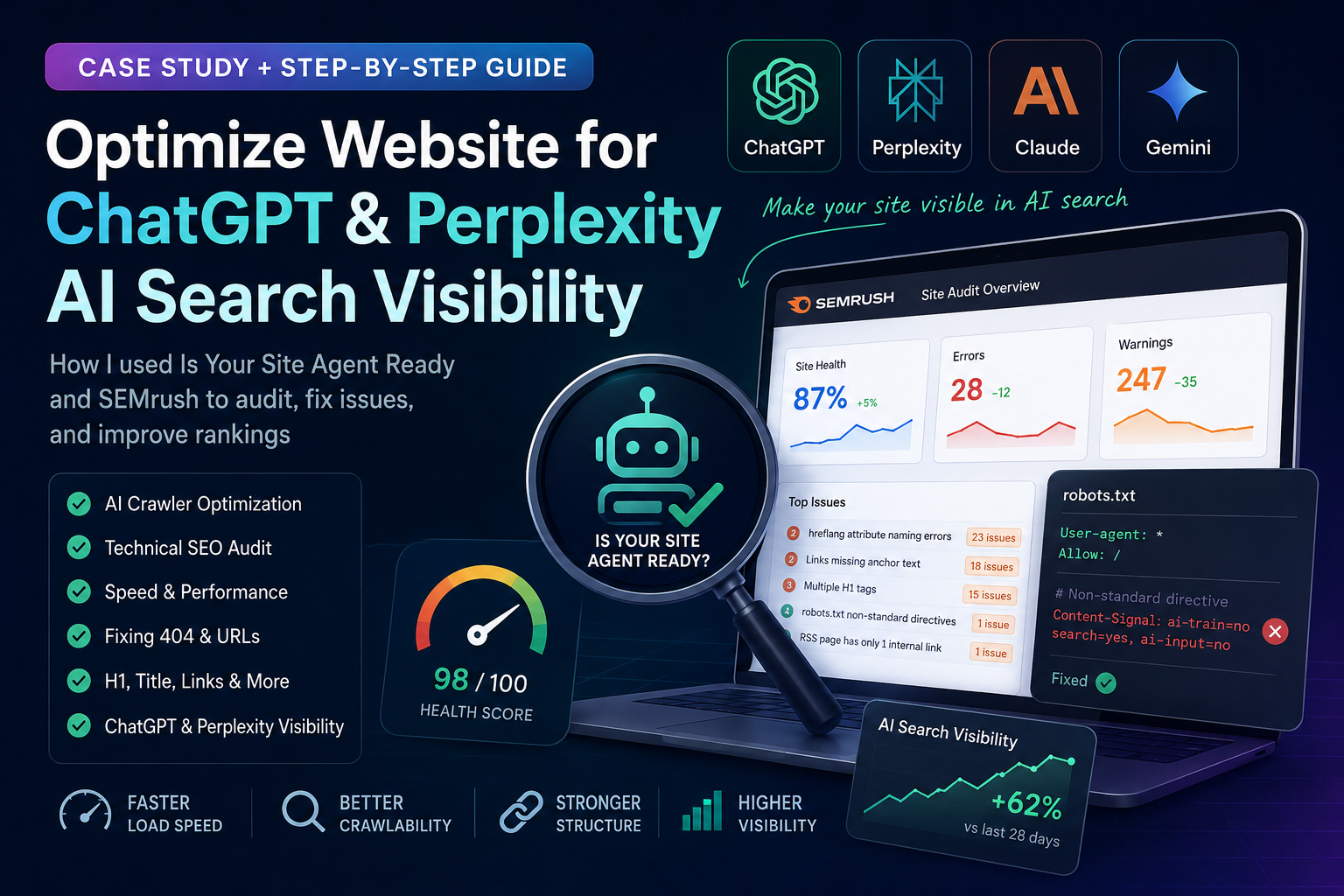
The result: more citations in Perplexity responses and growing referral traffic from AI-powered search. For the full details, read my complete case study on how I optimized my website for ChatGPT and Perplexity AI search visibility.
The Future of Perplexity SEO
Perplexity keeps evolving. Expect to see:
- More sophisticated content evaluation
- Better understanding of context and meaning
- Integration with other AI tools
- New optimization opportunities
The sites that adapt early will have an edge.
Conclusion
Perplexity SEO is about creating content that AI systems find valuable enough to cite. Focus on clear, authoritative content that answers real questions. Include strong citations, build topical authority, and keep your content fresh.
The work you put in now will matter as AI-powered search keeps growing.
For a broader look at AI search optimization, check our GEO SEO complete guide. If you also want to optimize for ChatGPT, read our ChatGPT SEO guide. For a practical example of AI SEO in action, see my case study on how I optimized my website for ChatGPT and Perplexity AI search visibility. If you are building with modern frameworks, my guide on Astro and Cloudflare Pages covers the technical foundation that makes sites crawlable for AI systems.