Why ChatGPT Search Matters
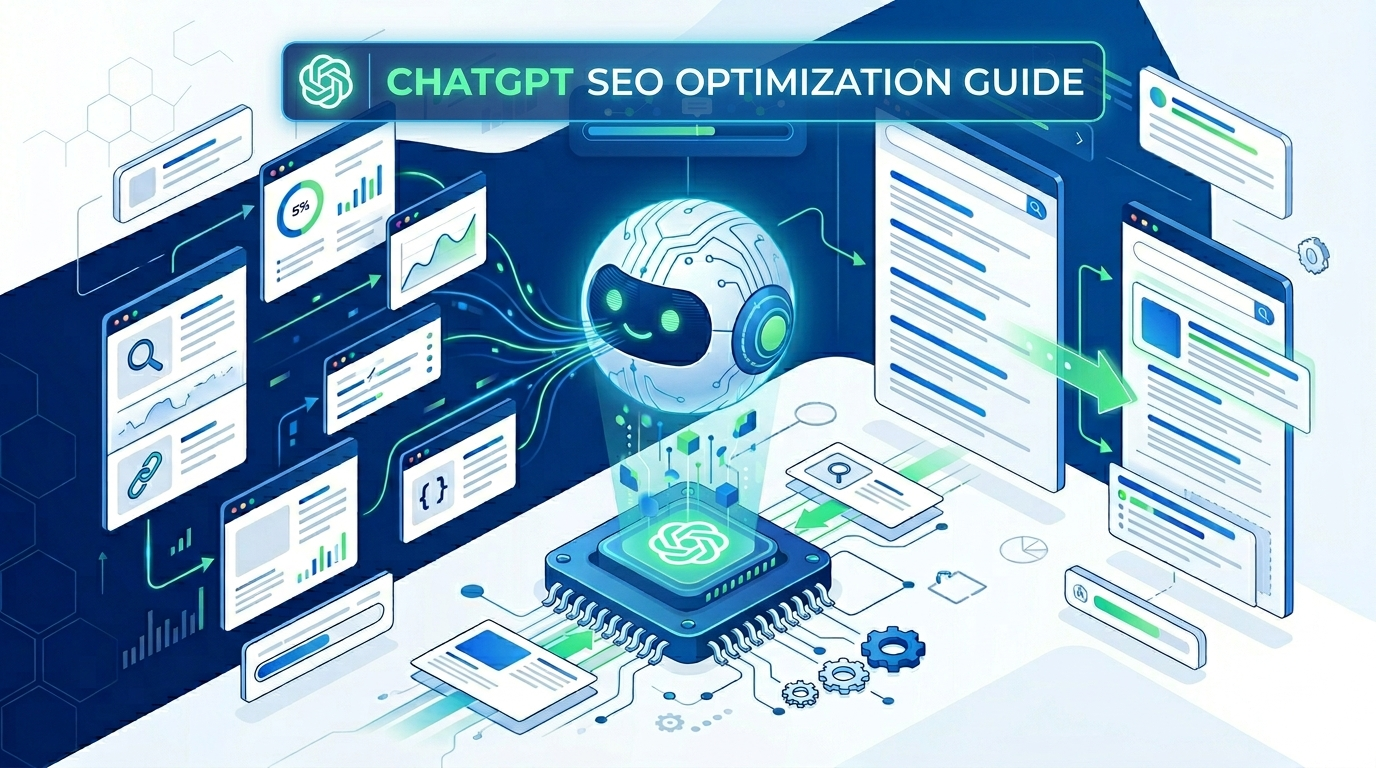
ChatGPT has become one of the most used search tools in the world. Its search feature pulls answers directly from web sources, so users get what they need without visiting traditional search results pages.
When someone asks ChatGPT a question, the AI reads multiple web pages, combines the information, and generates a response with citations. If your content is well-optimized, it can appear as a cited source.
This is different from traditional Google search. There is no “rank #1” position. ChatGPT picks sources based on relevance, authority, and content quality. Your goal is to be one of those sources.
How ChatGPT Search Works
The Citation Process
When a user asks ChatGPT a question:
- Query Analysis: ChatGPT figures out what the user wants to know
- Source Search: It searches its index for relevant web pages
- Content Evaluation: It checks each page for relevance and quality
- Synthesis: It combines information from multiple sources
- Citation: It attributes specific claims to their sources
What ChatGPT Looks For
ChatGPT evaluates content based on several factors:
- Relevance: Does the content directly address the question?
- Authority: Is the source credible and trustworthy?
- Clarity: Is the content well-structured and easy to understand?
- Freshness: Is the information current and up-to-date?
- Uniqueness: Does the content offer something original?
8 Strategies for ChatGPT SEO
1. Write Clear, Direct Answers
ChatGPT favors content that provides clear, direct answers. Start your articles with the most important information.
Instead of this:
In the ever-changing world of web development, choosing the right framework can be a daunting task. Many developers find themselves evaluating multiple options before making a decision.
Write this:
Astro is a JavaScript framework for building fast, content-focused websites. It ships zero JavaScript to the browser by default, making it one of the fastest frameworks available.
The second version gives ChatGPT something it can cite.
2. Structure Content for AI Parsing
ChatGPT processes content differently than human readers. Optimize your structure:
- Use clear H2 and H3 headings
- Start each section with a summary sentence
- Use bullet points for lists
- Include tables for comparisons
- Keep paragraphs short (2-3 sentences)
This makes it easier for ChatGPT to pull out the most relevant information.
3. Target Question-Based Queries
People ask ChatGPT questions, not keywords. Optimize for natural language queries.
Keyword approach (outdated):
“best JavaScript frameworks 2026”
Question approach (effective):
“What are the best JavaScript frameworks for building a website in 2026?”
Include the question as a heading and provide a direct answer. This matches how people actually use ChatGPT.
4. Include Specific Data and Examples
ChatGPT values content that includes specific, verifiable information:
- Real statistics and numbers
- Named tools and technologies
- Specific use cases
- Concrete examples
- Named sources and references
Vague claims get cited less often. Specific, factual content is more likely to be referenced.
5. Build Topical Authority
ChatGPT favors sources that demonstrate expertise on a topic. Create content clusters around your main topics.
For example, if you write about AI SEO:
- Main guide: “GEO SEO Complete Guide” (see our complete GEO SEO guide)
- Supporting articles: “ChatGPT SEO,” “Perplexity SEO” (check our Perplexity SEO guide), “Technical SEO for AI”
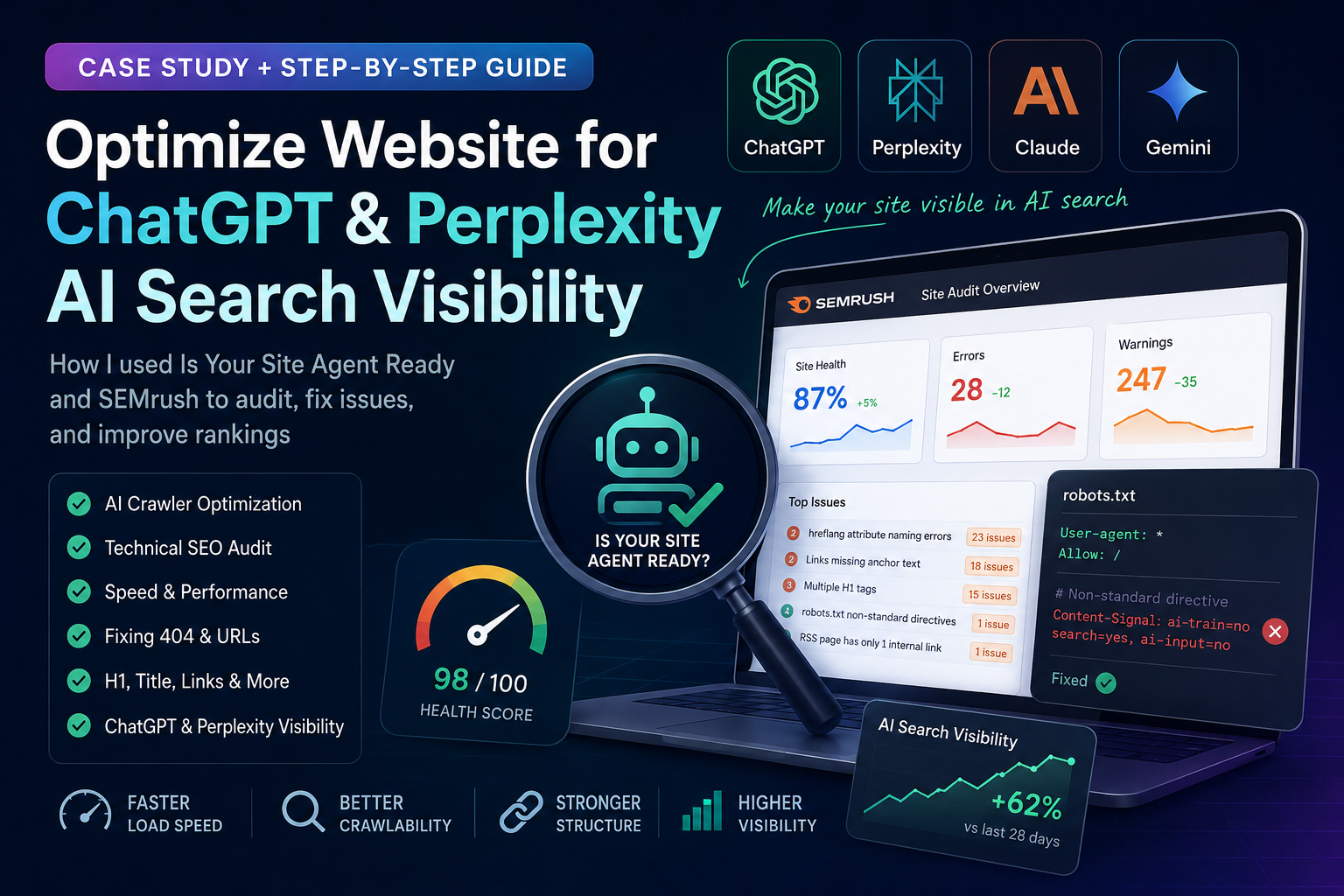
- Case studies: “How I Optimized My Website for AI Search”
Link these articles together to signal topical authority.
6. Cite Authoritative Sources
When you make claims, cite your sources. ChatGPT values content that references authoritative information:
- Link to official documentation
- Reference research studies
- Quote expert opinions
- Link to primary sources
This builds trust and makes your content more citable.
7. Keep Content Fresh
ChatGPT prefers recent, up-to-date information. Regularly update your content:
- Add new data and statistics
- Update examples and screenshots
- Revise outdated information
- Add new sections for recent developments
An article from 2024 gets cited less than one updated in 2026.
8. Create Original Content
ChatGPT values original perspectives and insights. Instead of rehashing existing information:
- Share your own experiences
- Conduct original research
- Create unique case studies
- Offer personal opinions and analysis
Original content stands out from the crowd of similar articles.
Technical Optimization for ChatGPT
Crawlability
ChatGPT needs to access your content. Make sure your site is crawlable:
- Allow GPTBot in your robots.txt
- Maintain a clean site architecture
- Use XML sitemaps
- Fix broken links and redirects
Page Speed
Slow-loading pages may get deprioritized. Optimize:
- Core Web Vitals
- Server response time
- Image optimization
- Code minification
Structured Data
Schema markup helps ChatGPT understand your content:
- Article schema for blog posts
- FAQ schema for question-answer content
- HowTo schema for tutorials
- Organization schema for company information
Content Formatting Tips
Use Clear Headings
Headings help ChatGPT understand your content structure. Use descriptive, keyword-rich headings.
Start Sections with Summaries
Begin each section with a summary sentence that captures the main point. This makes it easier for ChatGPT to extract key information.
Use Lists and Tables
Bullet points and tables are easier for AI to parse than dense paragraphs. Use them whenever appropriate.
Include a Table of Contents
A table of contents helps ChatGPT understand the scope and structure of your article.
Add an FAQ Section
Include frequently asked questions at the end of your article. This directly matches how people use ChatGPT.
Measuring ChatGPT SEO Success
Track Citations
Monitor when and where your content gets cited by ChatGPT:
- Search for your brand name in ChatGPT responses
- Track referral traffic from ChatGPT
- Monitor social media mentions of AI-cited content
Analyze Referral Traffic
Check your analytics for traffic coming from ChatGPT:
- Look for referral sources from chat.openai.com
- Track conversion rates from AI-referred visitors
- Monitor engagement metrics from AI traffic
Monitor Brand Mentions
Track when your content or brand gets mentioned in AI-generated answers across different platforms.
Common Mistakes to Avoid
Mistake 1: Keyword Stuffing
ChatGPT understands natural language. Keyword stuffing makes your content harder to read and less likely to be cited.
Mistake 2: Ignoring Technical SEO
GEO does not replace technical SEO. If your site has crawlability issues, ChatGPT will struggle to find your content.
Mistake 3: Writing Thin Content
ChatGPT prefers comprehensive, authoritative content. Short, shallow articles get cited less often.
Mistake 4: Not Updating Content
Outdated information gets cited less frequently. Keep your content current.
Mistake 5: Ignoring User Intent
Write for what people actually want to know, not for what you want to rank for. Match your content to user intent.
Case Study: Optimizing for ChatGPT
I optimized my own website for ChatGPT search and saw measurable results. Here is what I did:
- Audited my content for clarity and directness
- Restructured articles with clear headings and summaries
- Added structured data markup to all posts
- Updated outdated content with current information
- Built content clusters around key topics
The result: more citations in ChatGPT responses and increased referral traffic from AI-powered search. For the full details, read my complete case study on how I optimized my website for ChatGPT and Perplexity AI search visibility.
The Future of ChatGPT SEO
ChatGPT search keeps evolving. Expect to see:
- More sophisticated content evaluation
- Better understanding of context and meaning
- Integration with other OpenAI products
- New optimization opportunities
The sites that adapt early will have an edge.
Conclusion
Optimizing for ChatGPT search requires a shift in thinking. You are not trying to rank #1 anymore. You are trying to be one of the sources that ChatGPT finds credible enough to cite.
Focus on creating clear, authoritative content that answers real questions. Use structured data, build topical authority, and keep your content fresh. The work you put in today will matter as ChatGPT search keeps growing.
For a broader look at AI search optimization, check our GEO SEO complete guide. If you also want to optimize for Perplexity, read our Perplexity SEO guide. For a practical example of AI SEO in action, see my case study on how I optimized my website for ChatGPT and Perplexity AI search visibility. If you are building with modern frameworks, my guide on Astro and Cloudflare Pages covers the technical foundation that makes sites crawlable for AI systems.